
Blog
AI 2026: What's Real, What's Still a Challenge, and What's Next?
A critical visitor's view of the 2026 AI Summit: separating reality from promises
-
 Anikó Táborfi
Chief Process Officer
Anikó Táborfi
Chief Process Officer
- Published
- 1 min read
Introduction
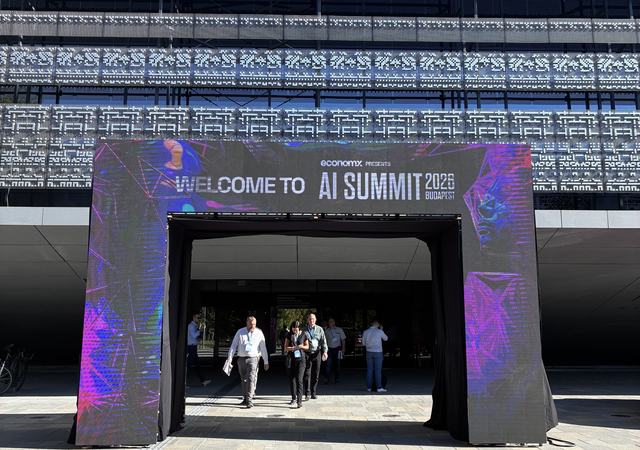
Three of us attended the AI Summit for the second time. Last year we came home inspired, with ideas to implement and new methods to try.
To be honest, we haven’t implemented all of them, but we did gain hands-on experience with prompt engineering, code generation, vibe coding, and collaboration methods, so we came in with different expectations this year.
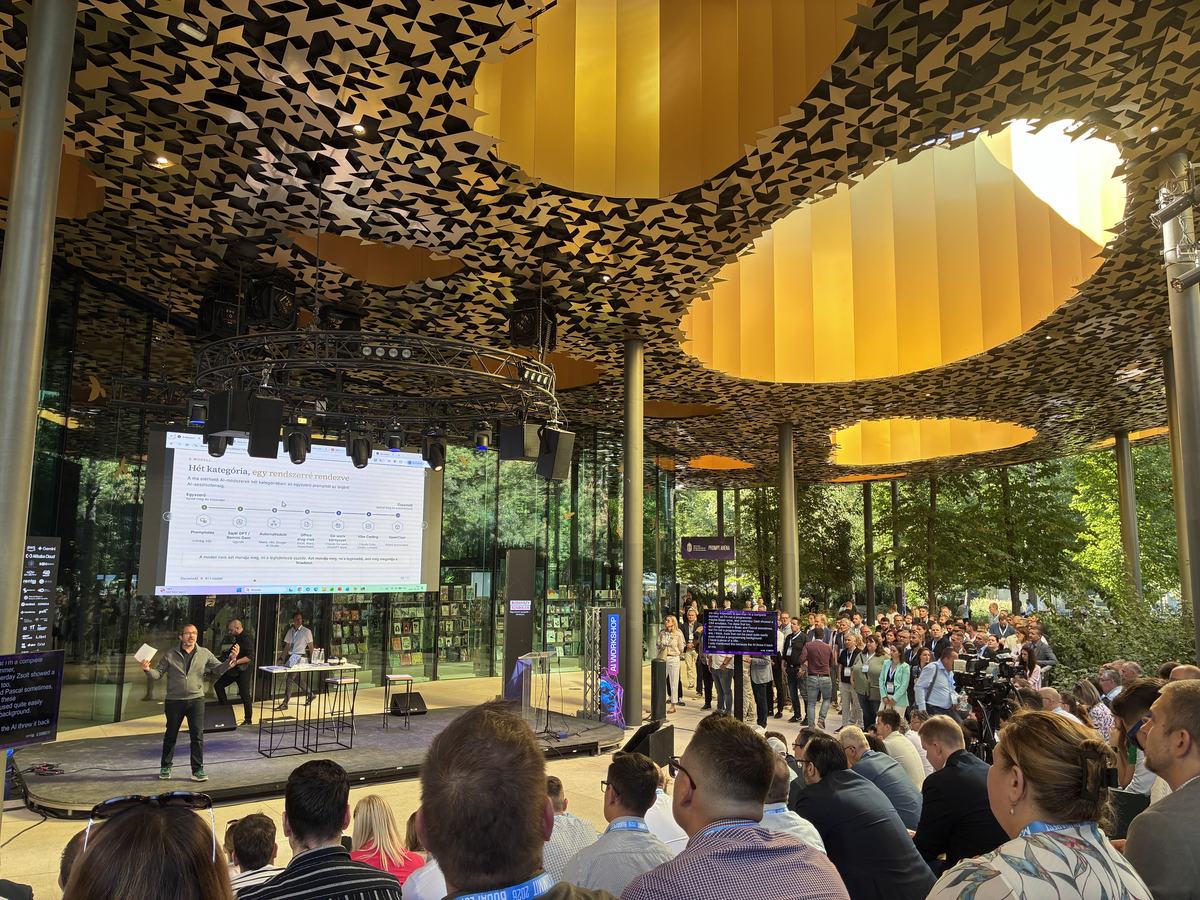
We wanted to hear about the trends, see what other attendees had achieved, and get an update on the hyped news, the scandals, and the compliance side. We covered as many areas as possible rather than sticking to the technical talks.
Here’s what we gathered, organised around what’s working, what’s still a hurdle, and what’s next.
What's Actually Working in Production
Across the sessions we attended, we saw major progress in several areas: society, regulation, professional services, creative production, sales workflows, healthcare, and cybersecurity.
- Document processing is no longer just relevant to content creation: it is also reshaping professional service providers through end-to-end workflows that analyse source materials, apply domain-specific skills and templates, and generate comprehensive, structured documentation. This is driving a shift toward packaged, software-like, or project-based service models.
- Repetitive, high-volume tasks can now be automated reliably with AI, freeing employees to focus on higher-value work. One practical use case is integrating AI agents with existing systems such as Notion or CRM tools to automate the customer journey from lead acquisition through project onboarding. However, this requires three key preconditions: high-quality data, clearly defined SOPs for training agents, and consistent measurement of the time saved.
- AI now strongly supports media production, though so far mainly on the content-generation side - it doesn’t replace the expertise needed for planning, organisation, and avoiding the pitfall of becoming overly generic. What ties these examples together: they’re already running in production, not stuck in pilot mode.
What's Still a Challenge
The introduction of AI brings challenges that go beyond technology. Organisations need to develop the right capabilities, prepare their people for new ways of working, and account for an evolving security landscape. Three key challenges stand out:
- Technology alone does not create lasting advantage: implementing AI is relatively easy; creating real value with it is not. One key takeaway: prompt quality can affect output quality by roughly 40%, which makes asking better questions a core skill.
- AI adoption is a human and organisational challenge: initial uncertainty can be overcome, but it takes change management and training.
- The availability of strong AI models has increased the number and speed of exploit attempts: malicious actors can more easily analyse older versions of software, hardware, vehicles, or other systems to identify vulnerabilities, especially in components that may no longer be patched.
Importantly, the most dangerous vulnerabilities aren’t always the highest-scoring CVEs. A 9.8 CVE usually gets wide coverage and is patched quickly, while lower-scored ones, such as 5.x CVEs, may be deprioritised and remain exploitable for longer.
Compliance adds another layer: regulations increasingly require explainability and auditability of AI decisions, yet most models function as black boxes.
What’s Next
The next phase of AI adoption will be shaped by more than technological progress. As AI becomes increasingly embedded in business and society, organisations will need to navigate evolving regulation while also addressing its environmental impact. Two areas in particular will shape what comes next:
Regulation and compliance: the enforcement of the EU AI Act updates has not been cancelled, but postponed. The extra time should be treated as an opportunity to act now and prepare thoroughly, not as a reason to delay action until the last possible moment. In parallel, Hungary’s MarCom AI Guide is expected to be further refined in Q4 2026, providing additional guidance for its practical application.
Sustainability: AI’s energy and water consumption has already made headlines and is common knowledge by now. The next step is to see AI as a tool for improving energy habits and shifting the energy mix toward more sustainable sources for the long term, rather than treating it simply as a harmful actor.

What Leaders Should Actually Do
At the Summit's “AI Economy” session, these were the questions that separate realistic pilots from expensive failures:
Is this solving a real operational problem, or are we trying to use AI because it's trendy?
- What's the current cost and the realistic improvement? (Aim for 20–30%, not 90%.)
- How will you measure it?
Can this be validated automatically?
- If the AI makes a mistake, how do you catch it before it affects the business?
Do you have the data?
- Audit trails for compliance? (Can you explain to regulators how the model decided?)
- Realistic data: If your training data is 90% "happy path," production will surprise you with edge cases.
Who owns the integration and ongoing operations?
- Do you have the engineering capacity? (Integration is 50% of the work, maintenance is 30%.)
- Who is responsible if it fails? (Name the owner, budget their time.)
What's the total cost of ownership?
- Look beyond the model license or API cost: infrastructure (GPUs, databases, storage), engineering, training, compliance, audit, and legal.
-
Red flags
vendor demos on clean data, claims of "no coding," projections of 100% automation, business cases ignoring retraining and monitoring, pilots with no production roadmap
-
Green lights
narrow problems with measurable baselines, existing testing infrastructure, cross-functional team ownership, explicit risk acceptance, realistic timelines
This is only part of the picture. In our next post, we’ll share more insights from the AI Summit, along with our personal impressions and key takeaways from the event.
Key takeaways
AI is not only a technical topic: it affects society, mental health, regulation, professional services, business models, and cybersecurity.
Keep the human in the loop: the most useful AI applications are those where automation is combined with human expertise, judgment, and accountability.
Calibrated trust in AI: organisations should identify AI use cases carefully, especially where regulation, responsibility, or high-risk decision-making may be involved.
Anikó Táborfi
Chief Process Officer
With a degree in Economics and a specialisation in Total Quality Management, Anikó has spent the past 20 years building her career in software quality and testing. Over the years, she progressed through roles including Team Lead and Test Manager, gaining extensive experience in software testing methodology, test strategy, quality management, and continuous improvement.
Today, as Chief Process Officer, she applies this quality-driven mindset beyond software testing: helping improve processes across the entire organisation. Her focus is on creating efficient, sustainable ways of working that turn continuous improvement into a company-wide practice.